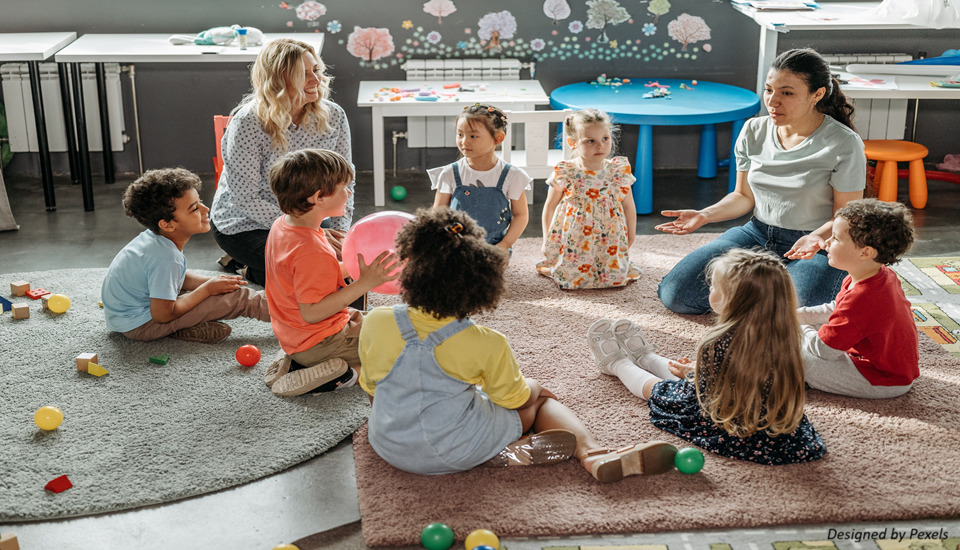
For decades, we viewed early learning as something that formally began when a child walked into a structured classroom. Today, international research confirms that a child’s linguistic foundation is built much earlier, built brick by brick through every day, normal interactions. These micro-moments, frequently referred to by developing psychologists as "serve-and-return" communications shape the neural architecture of a young brain.
For educators, policymakers, and worldwide advocates, understanding how to maximize these moments has become a key focus. It is also driving a noteworthy shift in teacher education, fueling a demand for cutting-edge professional training like specialised master programs for early childhood education.
The Global Push for Specialised Early Expertise
Around the world, the value placed on early learning is interpreting into extraordinary career prospects. According to global labor market data and projections from the Bureau of Labor Statistics, the demand for specialised early childhood educators, early intervention specialists, and instructional coordinators is projected to grow by up to 12% over the next decade. This growth rate meaningfully outpaces the average for all occupations.
Governments as well as private educational sectors worldwide are investing deeply in universal pre-K and early intervention contexts. Though, building physical schools is only half the battle; the true influence relies on high-quality human capital. To lead these modern, inclusive, and culturally responsive classrooms, professionals are gradually turning to a comprehensive early childhood education master's degree. These forward-thinking programs dive deep into cognitive neuroscience, socio-emotional development, and the precise mechanics of linguistics.
But what precisely are the core insights that these advanced educators bring to light? They center on the immense power of everyday dialogue.
The Structure of Serve-and-Return
The phrase "serve-and-return" draws a beautiful parallel to a tennis match. A child "serves" by gesturing, crying, babbling, or speaking a word. The adult "returns" the ball by responding directly to that cue, naming the object the child points to, mimicking their sound, or validating their emotion.
When an adult responds warmly to a child's gestures, they do more than just teach vocabulary. They produce neurological trails. Studies from the World Bank and the OECD emphasise that children raised in language-rich environments, where authentic dialogues are a constant feature of daily life, demonstrate vastly superior literacy, mathematical comprehension, and emotional regulation when they enter primary school.
What makes this method beautiful is its evenhandedness. It doesn't need expensive toys, high-tech educational tablets, or rigid flashcard sessions. It needs presence and conversation.
Applied Ways to Boost Daily Communications
Professionals who specialise in early development train parents and frontline care workers to implement simple, non-intrusive strategies into their existing routines:
Re-count the World (The Sports Broadcaster Technique): Talk through whatever you are doing. Whether folding laundry or walking through a park, translating sensory experiences into spoken words exposes children to miscellaneous sentence constructions naturally.
The Five-Second Pause: When a child asks a question or points to something, resist the urge to directly fill the silence. Giving a child a few seconds to process, formulate, and execute their vocal response builds confidence and informal stamina.
Develop and Elaborate: If a toddler points to a passing vehicle and says, "Car!", don’t just say yes. Expand it: "Yes, that is a big, fast red car! Look how bright the wheels are." You are recognising their "serve" while adding fresh linguistic layer to your "return."
Creating Language-rich Learning Settings: A language-rich environment is not defined by colourful posters or labelled shelves alone. It is shaped by expressive interactions that encourage children to speak, listen, and explore. In today's globally connected classrooms, recognising and respecting children's home languages also reinforces confidence and supports overall language development.
The Rising Demand for Skilled Early Childhood Educators
As governments and education systems continue investing in quality early childhood education, demand for competent professionals is increasing worldwide. According to the International Labour Organization (ILO), growing access to quality care and education for young children has the potential to create millions of new jobs internationally while improving educational outcomes for future generations. This growing demand highlights the need for educators who understand child development, communication strategies, and evidence-based teaching practices.
For professionals seeking to deepen their expertise, advanced study has become an increasingly valuable pathway. Countless educators choose master programs for early childhood education to develop stronger leadership skills, enhance curriculum knowledge, and gain a deeper understanding of language acquisition and child development. These programmes combine educational theory with practical strategies that can be applied directly in diverse learning environments.
Correspondingly, pursuing an early childhood education master's degree allows educators to explore research-based approaches to communication, inclusive education, literacy development, and family engagement. Graduates are frequently better prepared to support children's learning while taking on leadership, mentoring, or curriculum development roles within educational organisations.
Scheming the Future of Early Education
As the worldwide landscape becomes more unified and diverse, language development is no longer just about teaching a single native tongue. Contemporary educators must navigate bilingual households, multi-ethnic classrooms, and varying developmental timelines.
This complexity is accurately why advanced academic training is essential. Progressive graduate programs equip educators with the research-backed tools needed to design inclusive curricula, counsel anxious parents, and implement systemic changes in early childcare centers. They transform passionate caregivers into visionary leaders.
As the field of early childhood education continues to expand internationally, investing in professional learning through master programs for early childhood education equips educators with the knowledge and practical skills to support children's language development more efficiently. In doing so, they not only enrich classroom experiences but also help shape confident communicators and lifelong learners for generations to come.

 Asia
Asia 

